We’ve been hearing about the depletion of IPv4 addresses for years, but the reality is no longer a distant problem—the transition to IPv6 is officially here. While internet service providers (ISPs) and enterprise giants have already made the leap, small and medium-sized enterprises (SMEs) are now embarking on this mandatory migration.
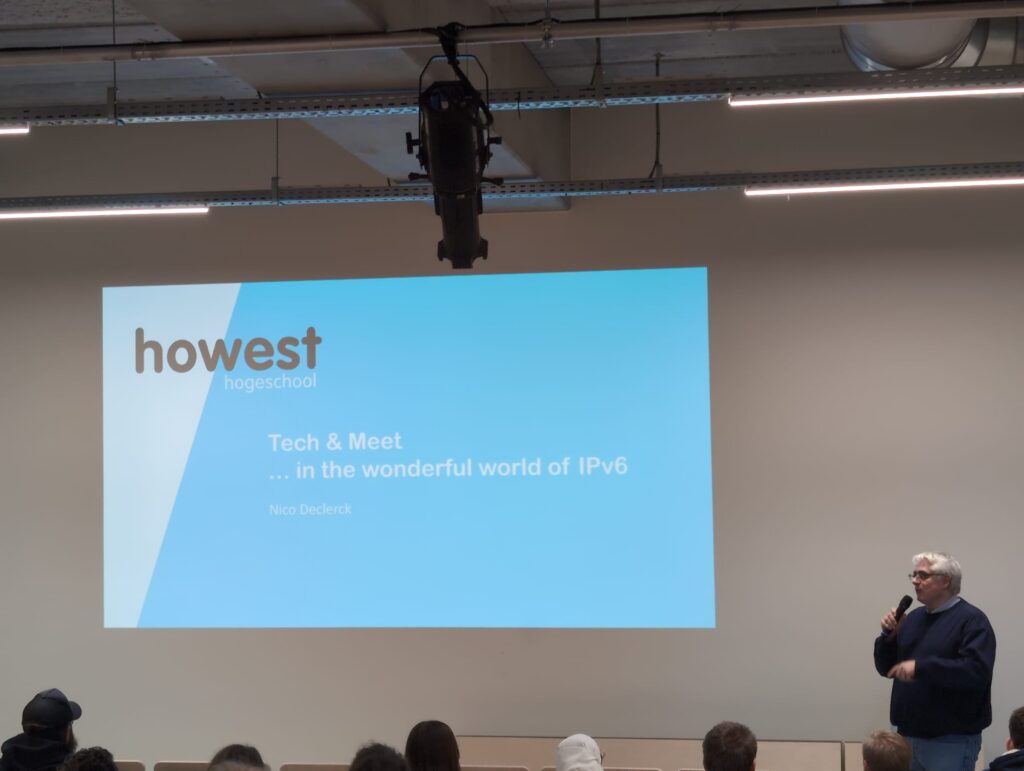
On November 25th, 2025, Howest hosted a highly practical Tech & Meet evening presentation titled “The Transition to IPv6” to break down exactly how organizations can navigate this shift securely.
The session was led by none other than Nico Declerck, an experienced network and Linux sysadmin, a researcher in the Howest Cluster IT, and a Cisco Instructor Trainer. Known for his deep technical expertise, Nico managed to make a dense networking topic incredibly engaging by weaving in juicy local anecdotes about the history and beers of Bruges!
Security by Design in a 128-bit World
As a cybersecurity student focused on Governance, Risk, and Compliance (GRC), this session was particularly fascinating. Infrastructure changes of this scale represent a massive pivot point for organizational risk. Implementing IPv6 isn’t just about changing an IP address scheme; it changes how we approach firewall configurations, routing policies, and visibility.
Nico broke down the evening into three crucial building blocks:
- Why IPv6 Can No Longer Be Postponed: Understanding the business and technical limitations of clinging to IPv4 (and the messy workarounds like NAT) versus the massive scalability benefits of IPv6.
- Transitioning to IPv6-Only: Exploring future scenarios, strategic risks, and the eventual architectural reality when IPv4 is deprecated entirely.
- Dual Stack in Practice: This was the core technical highlight. Nico showcased real-world configurations, demonstrating how to run IPv4 and IPv6 concurrently (Dual Stack) while maintaining a strict focus on security by design regarding firewalls and routing protocols.
The GRC Takeaway: Managing the Migration Risk
From a governance perspective, running a “Dual Stack” environment means managing two different network protocols simultaneously. This introduces unique security considerations. If a security team perfectly configures their IPv4 firewall rules but overlooks their IPv6 policies, they accidentally leave a wide-open back door into their network. Nico’s emphasis on a safe, secure, and deliberate transition path highlighted exactly why network administration and cybersecurity compliance must work hand-in-hand.
Want to Dig Deeper?
This 1.5-hour evening event offered an excellent high-level glimpse into the road ahead, but the migration itself requires deep, hands-on knowledge. For IT pros and network admins looking to execute this transition seamlessly, Nico also hosts a comprehensive online masterclass titled “Dual Stack IPv6” (in Dutch), which provides the deep-dive training needed to future-proof an organization’s architecture.
A huge thanks to Nico Declerck for sharing his expertise, his stories, and reminding us that the future of networking is already running right under our noses!
Is your organization already running Dual Stack, or are you still relying heavily on IPv4? Let’s talk about the hurdles of upgrading legacy infrastructure in the comments below!