In the world of app development, efficiency is everything. Historically, if you wanted an app to run beautifully on both iOS and Android, you had to maintain two entirely separate codebases. But modern frameworks have completely flipped the script.
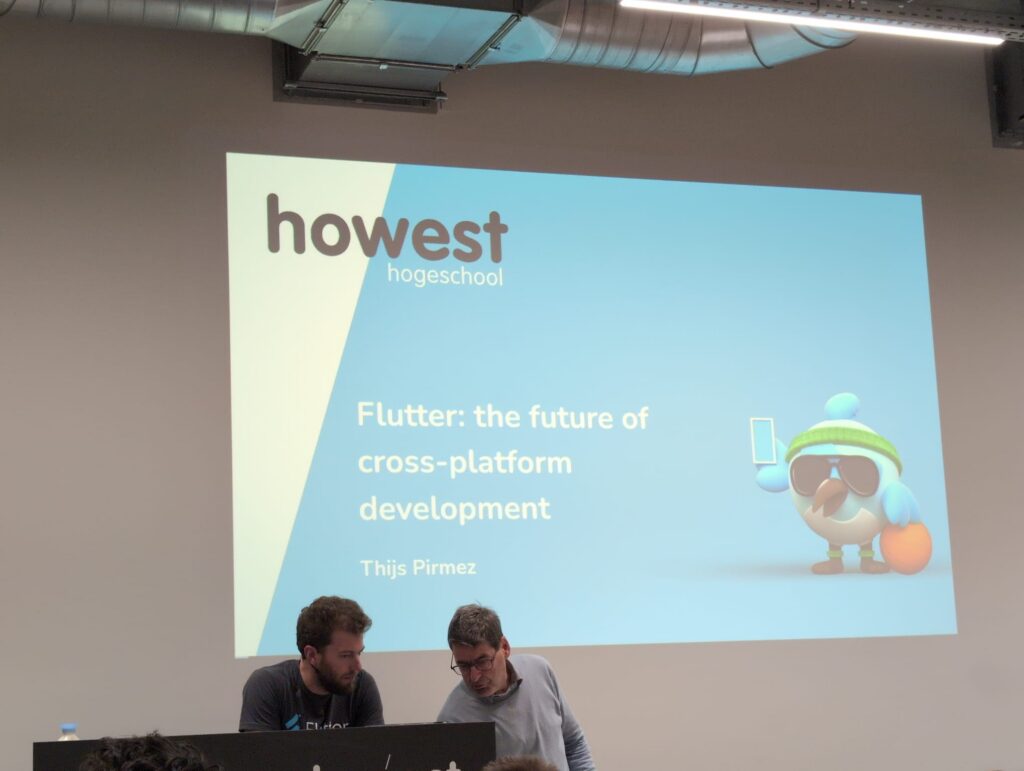
On November 5th, 2025, Howest hosted an engaging Tech & Meet evening session centered around one of the industry’s leading cross-platform frameworks: Flutter.
The evening was led by Thijs Pirmez, an Android/iOS developer and AI researcher from the Howest Cyber3Lab. As a self-taught coder turned professional, Thijs brought an incredible amount of practical, real-world experience to the stage. He offered an honest, transparent look at what it actually takes to build, deploy, and maintain cross-platform applications today.
The Power of the Widget System & Rapid Iteration
Thijs kicked off the core technical session by diving into the inner workings of the Flutter ecosystem. For many in the audience—ranging from software developers and designers to tech decision-makers—the live demos were the highlight of the night.
A few key takeaways from his presentation included:
- The Widget Ecosystem: Flutter treats everything as a widget. Thijs demonstrated how this architecture allows developers to build highly customizable, pixel-perfect, and high-performance User Interfaces (UIs) that look consistent across entirely different operating systems.
- The Magic of Hot Reload: One of Flutter’s greatest developer-experience features is “Hot Reload.” Thijs showed how sub-second code changes inject directly into the running app without losing its state, proving just how fast rapid prototyping and iteration can be.
- Native Integration: A common concern with cross-platform frameworks is whether they can talk to a phone’s native hardware. Thijs dispelled these doubts by showcasing how seamlessly Flutter integrates with native APIs and plugins.
GRC Perspective: The Risks and Rewards of “Build Once”
As a cybersecurity student focused on Governance, Risk, and Compliance (GRC), I always find myself looking at development frameworks through a slightly different lens. From a risk management standpoint, a single codebase like Flutter significantly reduces an organization’s attack surface and maintenance overhead. Instead of auditing two separate codebases (Swift/Kotlin) for security vulnerabilities and compliance flaws, security teams only have to review one.
However, Thijs also honestly touched upon the limitations and weaknesses of the framework, giving tech leaders the exact insights needed to weigh the strategic risks before locking into a tech stack for their next big project.
What’s Next? From Meetups to Masterclasses
The evening wrapped up with a highly interactive Q&A session, followed by drinks and networking where students and local IT professionals could chat directly with Thijs.
If this 1.5-hour session sparked your interest to dig much deeper, Howest has a lot more lined up:
- 🚀 “Start to Flutter” Masterclass: A deep-dive series consisting of 8 half-day hands-on sessions that kicked off on November 24th.
- ⚛️ React Workshop Series: For those interested in alternative frameworks, a similar hands-on React series is being planned for the second semester.
A huge thank you to Thijs Pirmez and the Howest Cyber3Lab team for sharing their expertise and putting on a fantastic event!
Did you catch the live demos? Are you team Flutter, team React Native, or team Native? Let’s discuss in the comments!